Zelensky signals a shift toward creating demilitarised zones in Ukraine’s latest peace proposal.
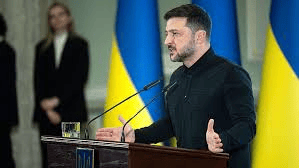
Ukraine’s President Volodymyr Zelensky has outlined a revised peace proposal that could allow for a limited withdrawal of Ukrainian forces from the east—an outcome Russia has long demanded.
Speaking about a 20-point plan finalised by US and Ukrainian negotiators in Florida over the weekend, Zelensky said Moscow was expected to respond on Wednesday after consultations with Washington.
Calling the proposal “the main framework for ending the war,” Zelensky said it includes security guarantees from the US, Nato and European partners, ensuring a coordinated military response should Russia invade again.
On the sensitive issue of the eastern Donbas region, Zelensky said the plan explores the creation of a “free economic zone.” While Ukraine opposes a full withdrawal, he explained that US negotiators are considering either a demilitarised zone or an economic zone, stressing that any territory vacated by Ukrainian troops would remain under Ukrainian policing.
“There are two choices,” Zelensky said. “Either the war continues, or decisions must be made about potential economic zones.”
The 20-point proposal updates an earlier 28-point document negotiated by US envoy Steve Witkoff with Russia, which critics said largely favoured Kremlin demands. Moscow has insisted Ukraine withdraw from nearly a quarter of the Donetsk region still under Kyiv’s control, with the remainder already occupied by Russian forces.
Zelensky said territorial questions would ultimately need to be resolved by national leaders, but the revised plan strengthens Ukraine’s security guarantees and allows for a peacetime military force of up to 800,000 troops.
Much of the updated framework reflects recent talks in Berlin and Miami involving US, Ukrainian and European officials, though Zelensky acknowledged that Kyiv and Washington have not reached full agreement on territorial compromises.
He said Ukraine might consider pulling back heavy weapons by 5, 10 or even 40 kilometres in parts of Donetsk to create an effectively demilitarised economic zone, provided Russia mirrors the same withdrawals. Russian forces are currently around 40 kilometres east of the key cities of Sloviansk and Kramatorsk.
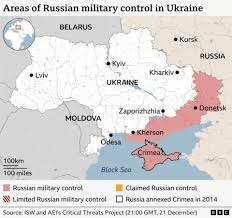
Zelensky made clear that any economic zone would remain under Ukrainian administration and law enforcement, with international forces monitoring the front line to prevent Russian incursions. Russia has rejected European proposals to police a peace deal, calling them a threat.
He added that the entire peace package would require approval through a national referendum, including any decision on an economic zone in Donbas.
The plan also calls for a similar zone around the Russian-occupied Zaporizhzhia nuclear power plant and demands Russia withdraw from four other regions: Dnipropetrovsk, Mykolaiv, Sumy and Kharkiv. Zelensky rejected a US suggestion for joint operation of the nuclear plant involving Ukraine, the US and Russia.
Key elements of the proposal reaffirm Ukraine’s sovereignty, establish a non-aggression pact with Russia, and include monitoring mechanisms. It mirrors Nato’s Article Five in its security guarantees and places no restrictions on Ukraine’s future Nato membership—unlike the earlier draft.
The framework supports Ukraine’s eventual accession to the EU with a specified timeline and proposes a $200bn investment fund backed by the US and Europe. It also calls for elections in Ukraine once the deal is signed, despite the country currently being under martial law due to the war.