“This Is My Life Now”: Umar Khalid’s Words to His Partner After Bail Rejection
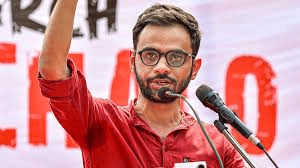
The Supreme Court refused to grant bail to Khalid and fellow student activist Sharjeel Imam in connection with the 2020 Delhi riots conspiracy case.
Soon after yet another opportunity for release slipped away following five years behind bars, activist and former JNU student Umar Khalid remarked that prison has become his life now, while expressing relief that five others in the case had secured bail.
On Monday, the Supreme Court refused bail to Khalid and fellow student activist Sharjeel Imam in the 2020 Delhi riots conspiracy case, stating that sufficient material existed to prima facie indicate their role in the alleged criminal conspiracy. However, the court granted bail to five co-accused — Gulfisha Fatima, Meeran Haider, Shifa Ur Rehman, Mohd Saleem Khan, and Shadab Ahmed — observing that their cases stood on a different footing.
A bench comprising Justices Aravind Kumar and N.V. Anjaria noted that those accused of conceiving, directing, or steering unlawful or terrorist activities cannot be equated with individuals whose alleged role was limited to facilitation or participation at a lower level. Ignoring such distinctions, the court said, would itself amount to arbitrariness.
Khalid’s partner, Banojyotsna Lahiri, shared on X that after the verdict she informed Khalid she would visit him at Tihar Jail on Tuesday.
“Good, good, aa jaana. Ab yahi zindagi hai (Good, come. This is my life now),” she quoted him as responding.
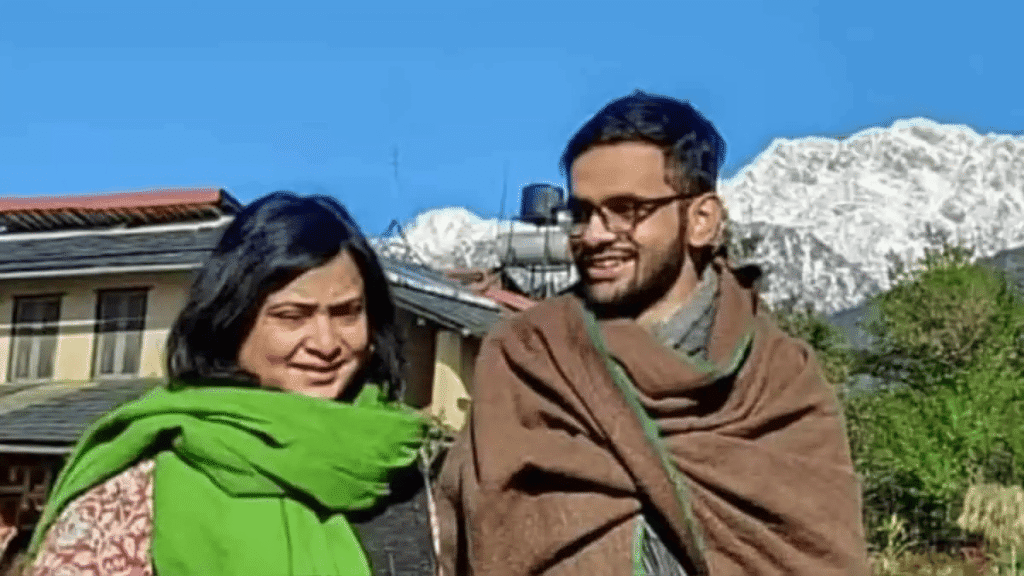
Lahiri also said Khalid was relieved that the other accused had been granted bail.
“I am really happy for the others who got bail. So relieved,” she quoted him as saying.
Imam was arrested on January 28, 2020, over speeches delivered during the anti-CAA protests and was later charged in the conspiracy case in August that year. Khalid was arrested on September 13, 2020. Both were booked under the stringent Unlawful Activities (Prevention) Act (UAPA).
The violence erupted in northeast Delhi on February 24, 2020, amid protests against the Citizenship (Amendment) Act (CAA) and the proposed National Register of Citizens (NRC), leaving over 50 people dead. The riots coincided with the visit of then US President Donald Trump to India.
Rejecting their bail pleas, the Supreme Court said delay in trial cannot be treated as a “trump card” to override statutory safeguards.
While the Constitution guarantees personal liberty, the court observed, such liberty is not absolute and must be balanced against the security of society, national sovereignty, integrity, and public order — values Parliament is empowered to protect through legislation.
The bench clarified that Khalid and Imam may apply for bail again after the examination of protected witnesses or after one year.
Criticism
The Delhi Police has alleged that Khalid and Imam were part of a well-planned, pan-India conspiracy aimed at “regime change”. Khalid, however, told a court last year that he had spent five years in custody on what he described as a “joke of an FIR”.
His lawyer argued that the process involved deciding whom to arrest first and then building a case through reverse engineering, claiming there were no concrete links to the alleged offences.
Last week, a group of US lawmakers wrote to Indian Ambassador Vinay Kwatra expressing concern over Khalid’s continued detention. The letter, signed by lawmakers including Representatives Jim McGovern and Jamie Raskin, urged the Indian government to ensure that judicial proceedings meet international standards.
Human rights organisations, including Amnesty International, have also criticised the prolonged incarceration of the activists.