“Get out four times”: Aussie rookie’s unconventional prep for Test cricket’s toughest role
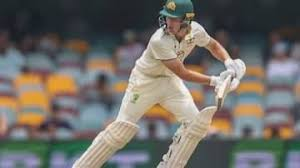
Jake Weatherald stepped onto the SCG outfield alone on Saturday morning, carrying only his bat.
With the early drizzle gone, ground staff had already removed the covers and begun preparing the wicket, repainting the crease and trimming the grass. Weatherald marked his guard on a neighbouring pitch, just metres from the surface set to host this week’s Ashes Test, and began his familiar pre-match routine.
He tapped his bat, dropped into his distinctive low, crab-like stance, lifted his eyes down the pitch and left an imaginary ball untouched. He briefly walked away, returned to his mark, and repeated the process. Another leave.
Soon, his rehearsal expanded. He pushed forward defensively, flicked through mid-wicket and cut freely, shadow-batting as if facing real deliveries.
This routine has become central to Weatherald’s match preparation. He has followed it before every Test this summer, visualising scenarios in the middle much like former Australian opener Matthew Hayden once did.
Even during routine forward defences, Weatherald occasionally glances toward the slips, as though the ball had nipped away and brushed the edge.
“I get out four times when I’m visualising,” he joked last month.
“It puts me in a good headspace and probably saves a few bowlers some work.”
Asked when the habit began, he replied: “Ever since I started getting better. Probably about three years now. I’ve developed my own consistent pre-game routines, which has been great.”
Since moving to Tasmania in 2023, Weatherald has emerged as one of the Sheffield Shield’s most reliable batters. His shadow-batting routine may have played a part. The 2024/25 season marked a breakout year for the Darwin-born opener, who finished as the competition’s leading run-scorer with a strike rate of 68.27 — comfortably the highest among openers. Many of those runs came at the bowler-friendly Bellerive Oval.
His form was perfectly timed. With Australia still searching for a long-term replacement for David Warner ahead of the Ashes, the 31-year-old earned his baggy green in November, debuting in the Perth Test. In his second match, he struck a fluent 72 from 78 balls in the pink-ball Test in Brisbane, registering his maiden Test fifty.
It briefly appeared Australia had found Warner’s successor. But scores of 18, 1, 10 and 5 followed. In Adelaide, he declined to review an LBW that pitched outside leg stump, and at the MCG he left a Ben Stokes delivery that crashed into off stump. England quick Jofra Archer also exposed a tendency for Weatherald to fall across his front leg.
Averaging just 20.85 this summer, Weatherald has yet to lock down his place, with Matthew Renshaw, Sam Konstas and Campbell Kellaway pushing for selection. With no Tests scheduled after the New Year’s Ashes clash until August, his position could be under threat if he falters in the latter half of the Shield season.
Questions remain over his long-term credentials, though he hasn’t been alone in struggling. Several top-order batters, including Marnus Labuschagne and England’s Ben Duckett, have found conditions difficult.
“He came in and did really well, then had a few innings where he missed out,” retiring opener Usman Khawaja said on Friday.
“Hopefully he gets back on track, but Test cricket is a different beast.”
Batting at the top in Australia has grown increasingly difficult since the pandemic, with greener pitches and a harder Kookaburra ball with a more pronounced seam. Over the past six years, Test openers have averaged 29.10, down sharply from 42.36 in the previous six.
“Top-order batting is as tough as I’ve seen it in four years,” interim captain Steve Smith said.
“They changed the pitches and the ball at the same time, which has made it challenging. Bowling averages are down, batting averages are down — you just have to play what’s in front of you.”
Khawaja, who has batted from No.1 to No.6 for Australia, believes opening is the hardest role in Test cricket.
“It’s tough on the body, but tougher on the mind,” he said.
“You’re switched on hours before the game, not knowing whether you’ll bat or field. There’s a mental side people don’t understand unless they’ve opened.”
“You do all the hard work, face the new ball, maybe bat for two hours, and nick off for 20. Then a spinner comes on and you’re pulling your hair out because you never got to face them.”
Weatherald’s rise has coincided with Travis Head’s promotion to the top order. Both are left-handed aggressors who score freely through point and apply pressure early. Historically, Australia’s best opening pairs have balanced aggression with resilience — a role Khawaja has filled since 2022.
After nearly two years searching for Warner’s replacement, selectors suddenly have multiple options. The question now is whether Australia needs two Warner-style openers at the top.
If Weatherald retains his spot, sterner tests await during a demanding 2026/27 schedule featuring tours of South Africa, India and England. Away conditions will ultimately define his case.
“I’d never judge an opener on just a few games,” Khawaja said.
“You judge them over a year or two. That’s when you see if they’re cut out for it. Opening wears you down mentally over time. You need patience.”
Ironically, chief selector George Bailey — also a Tasmanian — made his Test debut during a successful home Ashes series, only to be dropped after the final match in Sydney and never recalled.
Bailey may be reluctant to see history repeat itself, but with a decade of domestic cricket behind him, Weatherald can no longer be viewed as a work in progress.
The fifth and final Ashes Test begins at the SCG on Sunday at 10:30am AEDT.