
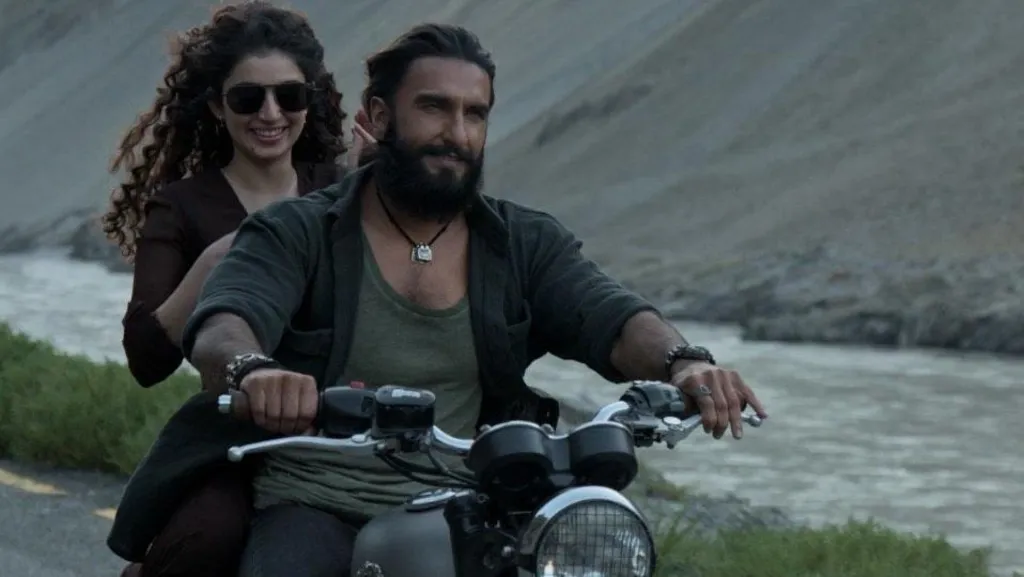
A new Bollywood film is dividing opinions in India and Pakistan:
A newly released Bollywood spy thriller has stirred both admiration and discomfort in India and Pakistan due to its provocative depiction of the long-running tensions between the two neighbours.
Dhurandhar, which arrived in cinemas last week, immerses viewers in a fast-paced world of espionage, gang rivalries and heightened patriotism. Led by Ranveer Singh in a commanding role as Hamza, an Indian intelligence agent sent on a dangerous mission to Karachi, the film follows his clashes with criminal syndicates, covert operatives and his own inner conflicts — all set against the fraught backdrop of India-Pakistan relations.
While audiences have applauded the film’s slick action sequences and gripping narrative, director Aditya Dhar’s latest project has also ignited controversy over its political undertones and portrayal of historical events.
Dhar first rose to prominence in 2019 with Uri: The Surgical Strike, a dramatised account of India’s 2016 airstrikes on Pakistan. The film became a box-office phenomenon and won him a national award. Since then, although Dhurandhar marks only his second film as director, he has co-written and produced several high-profile projects, including last year’s Article 370, centred on the 2019 revocation of Jammu and Kashmir’s special status — a film that drew praise from Prime Minister Narendra Modi.
Released just months after the most serious India-Pakistan military confrontation in two decades, Dhurandhar sees Dhar returning to political thrillers on a much larger canvas. The film is marked by intense violence — brutal close-quarter combat, relentless gunfights in crowded neighbourhoods, and prolonged torture scenes shot in claustrophobic frames that amplify discomfort.
Online reactions have been sharply divided. Supporters have lauded the film’s ambition and edge-of-the-seat storytelling, while critics argue that its aggressive nationalism and graphic violence feel provocative and potentially inflammatory. The backlash has been so fierce that some reviewers reported harassment, prompting the Film Critics’ Guild to issue a statement condemning targeted abuse against critics for their opinions on the film.
Despite the polarisation, Dhurandhar has attracted large crowds and is already among the year’s biggest commercial successes.
Its popularity reflects a broader trend in Indian cinema, which has seen a rise in nationalist blockbusters drawing directly from government actions and historical flashpoints. Films such as The Kashmir Files and The Kerala Story achieved major box-office success despite intense debate over their political narratives and factual accuracy. Spy thrillers, in particular, have long leaned on portraying Pakistan as India’s primary adversary — a trope shaped by decades of geopolitical rivalry.
Filmmakers behind such projects argue that audiences respond to stories that address sensitive, often ignored subjects tied to national memory and identity. “My films are not political; they are human stories,” Sudipto Sen, director of The Kerala Story, told the BBC last year. Critics, however, counter that many of these films blur the boundary between storytelling and propaganda, simplifying complex histories into one-sided narratives.
According to film critic Uday Bhatia, Dhurandhar fits squarely within this expanding genre, presenting itself as an espionage thriller infused with unapologetic nationalism.
Even before its release, the film encountered legal challenges when the family of a deceased army officer claimed parts of the story were inspired by his life without consent. Dhar denied the allegation, and the Central Board of Film Certification ultimately cleared the film as fictional.
Nonetheless, Dhurandhar incorporates real historical references, including archival footage and audio from the 2001 attack on India’s parliament and the 2008 Mumbai terror attacks. The narrative opens with a reference to the 1999 hijacking of an Indian passenger aircraft, prompting India’s intelligence chief, Ajay Sanyal (played by R Madhavan), to vow retaliation on Pakistani soil.
Hamza is subsequently dispatched to dismantle alleged links between Karachi-based gangs and terror networks, portrayed in the film as operating with the quiet backing of the Pakistani state. Karachi itself is depicted as chaotic and lawless — a city rife with abductions, gang warfare and brutal violence.
Some critics have taken issue with this portrayal, arguing that it exaggerates reality and casts Pakistan as inherently hostile. Others, however, believe Dhar’s depiction is more layered than expected. Vineeta Kumar wrote in India Today that the film’s political portrayal of Pakistan is “surprisingly nuanced” rather than cartoonish.
The reaction in Pakistan has been similarly mixed. Although formal cultural exchanges have dwindled — with Pakistan banning Indian films in 2019 and India frequently restricting Pakistani content — Bollywood remains immensely popular across the border, often accessed through unofficial channels.
Pakistani editorials, including in Dawn, criticised the film’s negative portrayal of the country and highlighted factual errors, such as linking Karachi’s Lyari gang to India-related militancy. Karachi-based content creator Bilal Hussain said he was surprised the gang was featured at all, though he acknowledged the film’s performances and production values, despite what he described as its propagandistic elements.
The most severe backlash came from Pakistan’s ruling Sindh party, the Pakistan Peoples Party (PPP), over a scene depicting a fictional PPP rally. Party leaders accused the film of deliberately misrepresenting the party as sympathetic to militant groups.
Despite these controversies, analysts believe Dhurandhar is unlikely to diminish Bollywood’s appeal in Pakistan, where the local film industry struggles to compete. In India, many viewers have dismissed the political debate altogether, insisting they watched the film purely for entertainment.
“In the end, it’s a work of fiction and can invent what it wants,” Bhatia says. “But it undeniably advances a selective and slanted worldview — and does so very effectively.”